
Volkswagen : HOW PEDESTRIAN MONITORING HELPS IMPROVE YOUR VIEW AHEAD

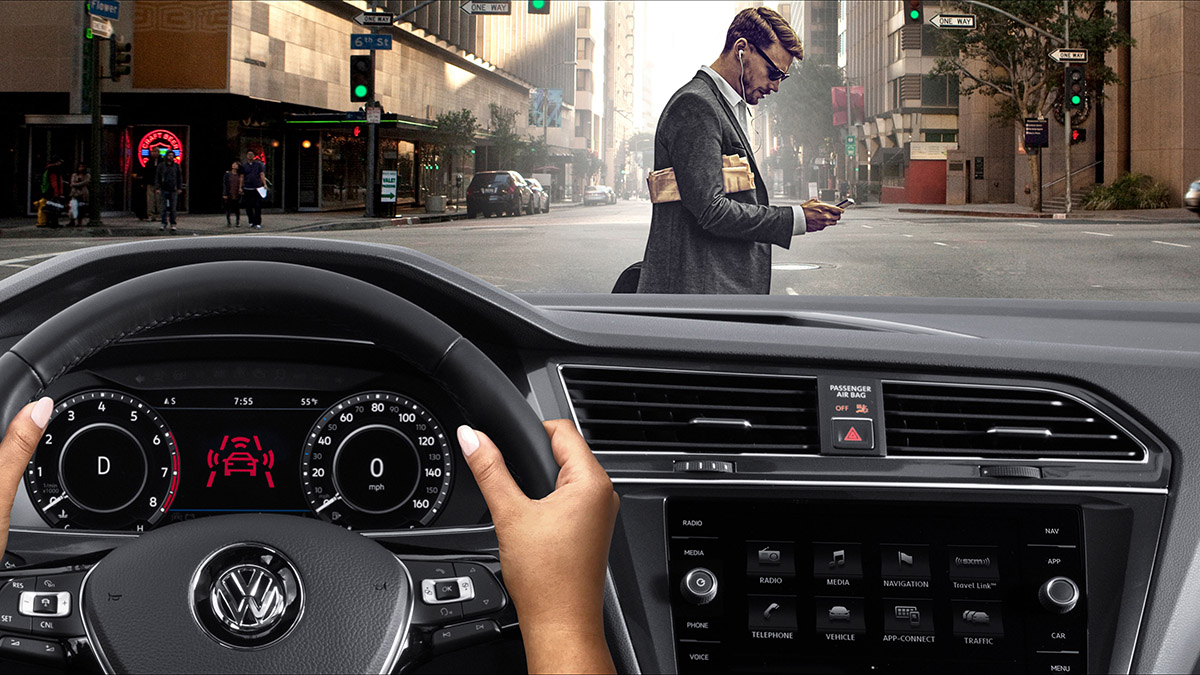
With millions of drivers and pedestrians sharing the road, it’s more important than ever to help them do so safely. That’s why Volkswagen developed its Pedestrian Monitoring technology as part of its Front Assist system to help drivers stay aware of other road users.

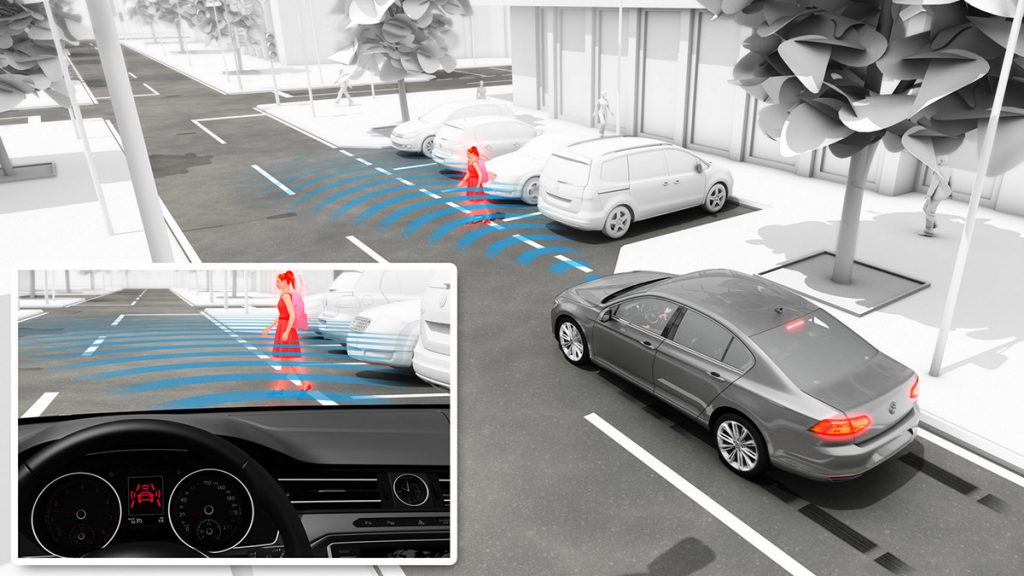
The applied technology that makes Pedestrian Monitoring possible is a small radar, a narrow square a few inches on each side that discreetly fits behind the Volkswagen emblem on the front of the vehicle. Able to work in daylight or darkness, the radar sweeps points located in an area within about 35 degrees and up to about 400 feet ahead of the vehicle hundreds of times per minute. The system then analyzes the data from the radar for the specific “signature” of pedestrians that are about to cross in front of the vehicle or walking away from the vehicle inside the vehicle’s path.

If the car is traveling at a speed between about 4 and 18.6 mph, and the Pedestrian Monitoring detects movement in front of the vehicle, the system applies automatic braking to slow or stop itself to help avoid a collision, using a precise amount of braking force. At speeds between 18.6 and 40 mph, the Pedestrian Monitoring system sends both audible and visual alerts to the driver – and if the driver does not respond, then automatic braking engages. The system does not operate at speeds above 40 mph.

It is important to note that Pedestrian Monitoring may not work in all conditions and environments, for example when the radar sensor’s vision is blocked by dirt or snow; it can only function within the laws of physics But the radar technology can offer improved awareness of pedestrians in fog or harsh sun glare where a driver’s vision might be hindered.

Currently, Front Assist with Pedestrian Monitoring is available on all 2019 Volkswagen models except the Beetle, Jetta and Passat ; it’s standard on the Arteon, Atlas, Golf, Golf R and Golf Alltrack and included on all but the base trim levels of other models. By 2022, Front Assist and autonomous emergency breaking (AEB) are expected be standard on nearly all Volkswagen models – an important step toward accident prevention.
Volkswagen
Suivez-nous :
Faris Bouchaala
Faris Bouchaala
Faris Bouchaala est Directeur de publication et Rédacteur en chef de MotorsActu, média automobile français fondé en 2018. Journaliste automobile depuis plus de 14 ans, il couvre l’actualité automobile française et européenne, avec un focus sur les essais, les nouveautés constructeurs, l’électrification et les technologies embarquées.
Articles connexes

480 km et nouvelle batterie : la Renault Mégane...

Renault annonce une mise à jour de la Mégane E-Tech Electric, prévue ce printemps. Avec une nouvelle chimie de batterie lithium-fer-phosphate et une autonomie dépassant 480 km, elle se dote d'un design sportif pour renforcer sa compétitivité sur le marché.

« Ensemble on va gagner » : la lettre...

Antonio Filosa, PDG de Stellantis, a adressé une lettre franche sur les déceptions de 2025, reconnaissant les erreurs stratégiques et opérationnelles. Il annonce un « reset » nécessaire, axé sur l'exécution, et des premiers signes d'amélioration pour 2026.

213 km/h en drift : la Chine prend le...

La Hyptec SSR, hypercar électrique produite par GAC Aion, détient le record du drift à 213,52 km/h, prouvant les capacités techniques des constructeurs chinois face aux géants européens. Une avancée significative dans le secteur automobile.

Top Actualité

480 km et nouvelle batterie : la Renault Mégane électrique passe un cap décisif

Renault annonce une mise à jour de la Mégane E-Tech Electric, prévue ce printemps. Avec une nouvelle chimie de batterie lithium-fer-phosphate et une autonomie dépassant 480 km, elle se dote d'un design sportif pour renforcer sa compétitivité sur le marché.

Dacia charge Bruxelles : « Les normes européennes font exploser les prix »

Katrin Adt, PDG de Dacia, dénonce l'impact des réglementations européennes sur les prix des voitures, tout en plaidant pour une catégorie M1E et une électrification abordable, tout en soulignant les défis à venir.
Nouveautés

Audi A2 e-tron : ces nouvelles photos espion révèlent enfin l’intérieur

La future Audi A2 e-tron, actuellement en phase de développement, se distingue par un design innovant, un intérieur inspiré des modèles récents d'Audi et des performances de motorisation similaires à la Cupra Born. Production prévue en 2026.

Ford Kuga 2026 reçoit BlueCruise mains libres en Europe

Ford intègre sa technologie BlueCruise de conduite semi-autonome au Kuga dès avril 2026, offrant un système mains libres sur plus de 135 000 kilomètres d'autoroutes en Europe, avec options tarifaires flexibles.

480 km et nouvelle batterie : la Renault Mégane électrique passe un cap décisif

Renault annonce une mise à jour de la Mégane E-Tech Electric, prévue ce printemps. Avec une nouvelle chimie de batterie lithium-fer-phosphate et une autonomie dépassant 480 km, elle se dote d'un design sportif pour renforcer sa compétitivité sur le marché.
Articles Récents